Knee pain after 40 is one of the most common reasons people slow down their activity — even if they’ve stayed active their whole lives.
For some, it starts as stiffness in the morning.
For others, it shows up after walking, golfing, working out, or standing for long periods.
The good news: many cases of knee pain can be managed at home with the right combination of support, recovery tools, and habits.
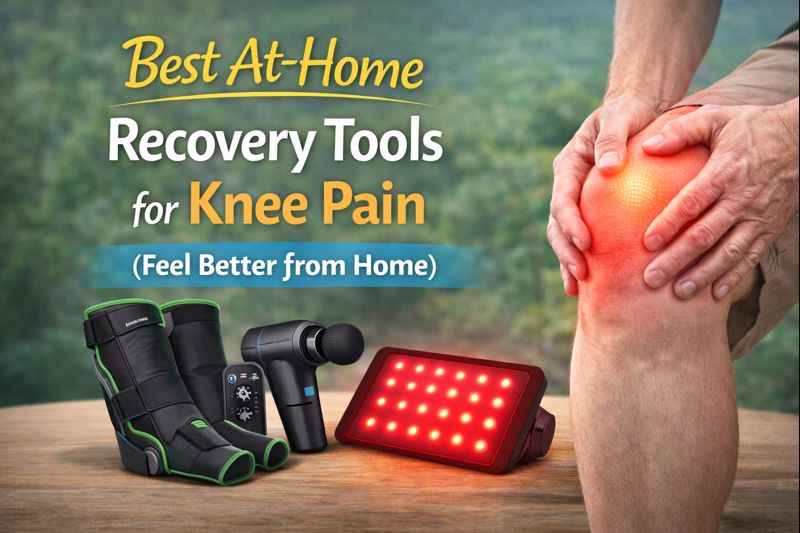
This guide explains why knee pain happens, what symptoms to watch for, and the most effective at-home relief options, including knee compression sleeves and recovery tools.
Why Knee Pain Becomes More Common After 40
As we age, several factors contribute to knee discomfort:
- Natural wear on cartilage and joints
- Reduced circulation to the lower body
- Past injuries that never fully healed
- Muscle tightness in the hips, quads, and calves
- Slower recovery after activity
Knee pain is often not just a knee problem — it’s influenced by surrounding muscles, circulation, and joint health.
Common Knee Pain Symptoms
You may notice:
- Stiffness after sitting or sleeping
- Soreness after walking or exercise
- Swelling around the knee
- Discomfort going up or down stairs
- A feeling of weakness or instability
If pain is severe, sudden, or worsening, medical evaluation is important.
But for mild to moderate knee pain, at-home support often helps significantly.
At-Home Relief Options for Knee Pain
🦵 Knee Compression Sleeves
Knee compression sleeves are one of the most accessible and affordable knee pain relief options.
They work by applying gentle compression around the joint, which can:
- Improve circulation
- Reduce swelling
- Provide warmth and joint awareness
- Offer light support during movement
Best for:
- Mild to moderate knee pain
- Walking, golf, or daily activity
- People who want support without bulk
Compression sleeves are not a cure, but many people find they reduce discomfort during and after activity.
👉 View knee compression sleeve options for daily support
🥇 Compression Therapy for Knee and Leg Recovery
For knee pain linked to leg fatigue, swelling, or circulation, compression therapy can be very effective.
Compression boots use controlled air pressure to move fluid and blood through the legs, helping:
- Reduce swelling around the knee
- Improve overall lower-body circulation
- Ease stiffness after long days or activity
This option works especially well when knee pain is accompanied by:
- Heavy or tired legs
- Calf or quad tightness
- Post-activity soreness
👉 See compression therapy options for knee recovery
💪 Massage Guns (Used Correctly)
Massage guns can help with muscles that influence knee pain, including:
- Quadriceps
- Hamstrings
- Calves
- Glutes
By reducing muscle tension, massage guns can relieve stress placed on the knee joint.
⚠️ Important:
Avoid using massage guns directly on the kneecap or joint. Focus on surrounding muscles only.
👉 Explore massage guns for muscle support around the knee
🔴 Red Light Therapy for Chronic Knee Pain
Red light therapy is often used by people dealing with ongoing or inflammatory knee discomfort.
It may help support:
- Reduced inflammation
- Tissue recovery
- Joint comfort over time
Red light therapy is best for:
- Chronic stiffness
- Arthritis-related knee pain
- Long-term joint care
Results are gradual, but many people use it as part of a consistent recovery routine.
👉 View red light therapy options for knee pain
Lifestyle Habits That Support Knee Relief
Recovery tools work best when combined with simple habits:
- Gentle daily movement
- Stretching hips, quads, and calves
- Maintaining a healthy weight
- Wearing supportive footwear
- Avoiding sudden spikes in activity
Small, consistent changes often make a big difference.
Which Knee Pain Relief Option Is Best?
It depends on the cause of your pain:
- Mild daily discomfort: Knee compression sleeves
- Swelling or leg fatigue: Compression therapy
- Muscle-related pain: Massage guns
- Chronic joint pain: Red light therapy
Many people start with compression sleeves, then add other tools as needed.
Frequently Asked Questions
Can knee compression sleeves be worn all day?
Yes, but most people wear them during activity or when standing/walking for long periods.
Should I stop exercising if my knees hurt?
Low-impact movement often helps, but persistent or sharp pain should be evaluated by a professional.
Do recovery tools replace medical care?
No. They support recovery and comfort but do not replace diagnosis or treatment when needed.
Final Thoughts
Knee pain after 40 is common, but it doesn’t have to control your activity or lifestyle.
By understanding the cause of your discomfort and choosing the right at-home relief options, many people are able to stay active, comfortable, and confident in their movement.
Start with simple support, stay consistent, and build your recovery routine over time.
👉 Compare the best at-home muscle recovery tools for joint and knee pain here
 Recover at Home Guide
Leave a comment