Lower back pain after 40 is incredibly common — even if you don’t consider yourself “injured.”
Long hours sitting, standing, walking, or golfing can leave your lower back stiff, tight, or sore in ways that don’t go away as quickly as they used to.
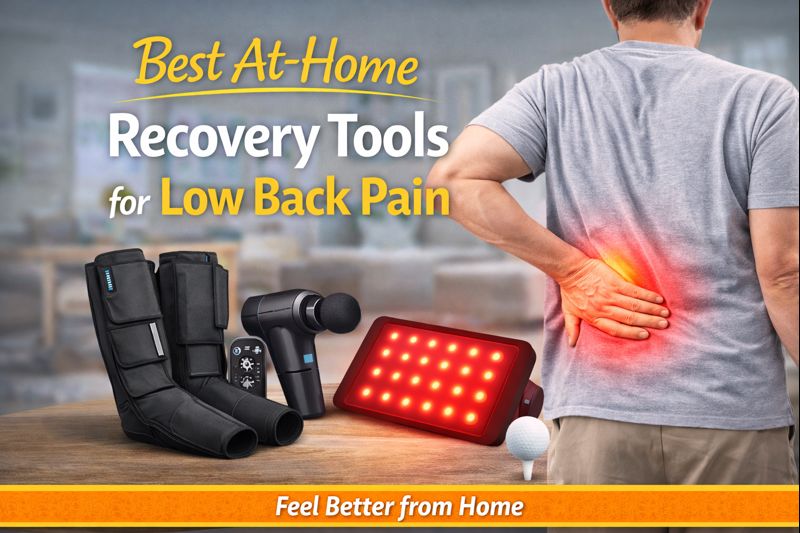
The good news is that the right at-home recovery tools can help relieve lower back pain, when they’re used correctly and consistently.
This guide covers the best recovery tools for lower back pain after 40, what actually works, and what’s worth your money.
Quick Answer: What Works Best for Lower Back Pain?
If you want the short version:
- Best overall: Massage guns (used correctly)
- Best for circulation & stiffness: Compression therapy
- Best for chronic pain & inflammation: Red light therapy
- Best budget option: Foam rollers & lumbar supports
The key is supporting muscles around the spine, not applying aggressive pressure directly on the spine itself.
Why Lower Back Pain Gets Worse After 40
Lower back pain often increases with age because of:
- Reduced flexibility
- Muscle imbalances
- Long periods of sitting or standing
- Slower recovery from strain
That’s why recovery tools that improve blood flow, muscle relaxation, and tissue recovery tend to work better than quick fixes.
🥇 Best Overall Tool for Lower Back Pain: Massage Guns
Massage guns are one of the most effective at-home tools for lower back pain, when used on surrounding muscles.
They help relieve tightness in:
- Lower back muscles
- Glutes
- Hip flexors
- Hamstrings
How Massage Guns Help the Lower Back
- Increase blood flow
- Reduce muscle tension
- Improve mobility
- Provide fast relief
Important Safety Tip
Do not use massage guns directly on the spine.
Instead, focus on the muscles around the lower back.
👉 See top-rated massage guns for back pain relief
Compression Therapy for Lower Back Pain
While compression boots are best known for leg recovery, compression therapy can still help lower back pain indirectly by improving circulation and reducing lower-body stiffness.
Better leg and hip circulation often leads to:
- Less tension pulling on the lower back
- Improved recovery after walking or standing
- Reduced stiffness over time
Compression therapy works best when back pain is linked to:
- Long periods on your feet
- Tight hips or legs
- Overall lower-body fatigue
👉 Check compression therapy options for recovery support
🔴 Red Light Therapy for Chronic Lower Back Pain
Red light therapy is popular for people dealing with ongoing lower back discomfort, especially when inflammation is involved.
It may help:
- Reduce inflammation
- Support tissue healing
- Improve circulation over time
Red light therapy works best for:
- Chronic or recurring pain
- Joint stiffness
- People who want a low-impact recovery option
Downside:
Results take longer and require consistent use.
👉 View trusted red light therapy options for back pain
🧘 Budget Tools That Still Help
If you’re starting simple, these tools can still support lower back recovery:
Foam Rollers
- Roll glutes, hamstrings, and upper back
- Avoid rolling directly on the lower spine
Lumbar Supports
- Helpful during sitting or driving
- Encourage better posture
These tools work best alongside massage or compression therapy.
Which Recovery Tool Is Best After 40?
For most adults over 40 dealing with lower back pain, the most effective setup is:
- Massage gun for muscle tension
- Compression therapy for circulation
- Optional red light therapy for chronic inflammation
If you can only choose one:
👉 Start with a massage gun, used carefully and consistently.
Frequently Asked Questions
Can recovery tools replace medical treatment?
No. They support recovery but don’t replace professional medical care.
How often should I use recovery tools for back pain?
Most people benefit from 3–5 sessions per week, especially after activity or long days.
Should I avoid exercise if my back hurts?
Low-impact movement often helps, but listen to your body and consult a professional if pain is severe.
Final Thoughts
Lower back pain after 40 doesn’t mean you have to stop moving or living actively. With the right recovery tools, you can reduce stiffness, ease discomfort, and recover more comfortably at home.
Start with one tool that targets muscle tension, use it consistently, and build from there.
For a complete overview of recovery tools, read our guide to at-home muscle recovery tools.
 Recover at Home Guide
Leave a comment